Chickweed: The Weed We Should All Learn to Love


If you have a yard of any size, you’ve probably spent some time each spring pulling up chickweed, also known as starwort, starweed, winter-weed, among other names. I learned it as common chickweed (Stellaria media), and I also spent time trying to banish is from my yard until I learned what a powerhouse of food and medicine this fragile “weed” really is. Now, it is a beloved, though short-lived, friend in my garden.
Chickweed is one of the earliest spring plants to appear. In fact, it is so cold hardy that a few warm days in December and January will encourage new shoots of chickweed to appear. Here’s a small patch of chickweed nestled in the protection of a fallen log.
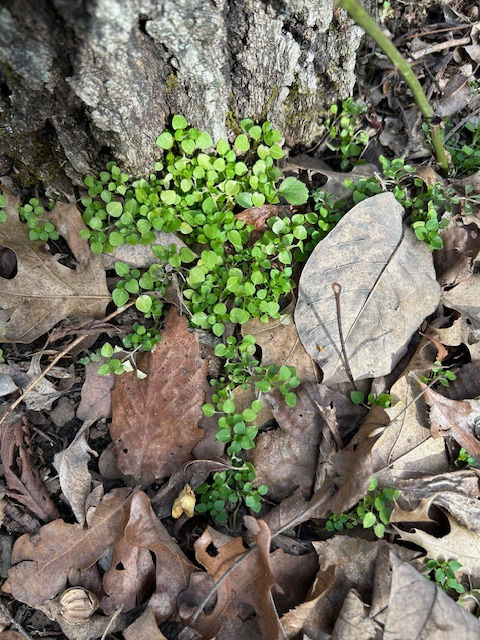
This chickweed appeared just a few days after the January snow. It hasn’t started creeping yet, and there are no flowers. This seems to be scouting on the part of the plant to see if the time is right to commit to flowering. It’s not, but those beautiful green leaves are full of phytochemicals and nutrients that can be hard to find in the winter. Chickweed is especially rich in vitamins A and C, as well as calcium, and it contains more iron than a comparable amount of spinach. Additionally, chickweed contains B complex vitamins, potassium, and fiber. Chickweed can be used as sprouts on sandwiches or tossed in with other leafy greens for salad. Chickweed also makes a great pesto.
Check out this recipe from Grow Forage Cook Ferment:
Chickweed Pesto
Ingredients
1/2 cup walnuts, cashews, or pine nuts
2-3 cloves garlic minced
3 cups chickweed loosely packed
1 Tbsp lemon juice
1/2 cup extra virgin olive oil
1/2 tsp salt
1/4 tsp freshly ground black pepper
1/4 cup freshly grated Parmesan cheese
Instructions
1. Place all ingredients into a food processor and process until smooth. (A blender can be used instead, but the chickweed should be finely chopped first)
2. If it's too thick, slowly drizzle in a bit more olive oil.
Notes
Keep refrigerated. Eat or freeze within 3-4 days.
Chickweed Pesto https://www.growforagecookferment.com/chickweed-pesto/
Chickweed is also good medicine for the skin (as a salve), easing irritation, itchiness, and diaper rash. Personally, I’ve found chickweed tincture to be a consistent source of relief for acid reflux though not many people use it this way. Many herbalists use chickweed tinctures as an herbal supplement to add to tea because of the rich array of nutrients found in this powerhouse plant. Regardless of how you choose to use chickweed medicinally, keep in mind it does not dry well. Most of what makes chickweed so useful is lost in the drying process. So, gather the chickweed you believe you’ll need and infuse it in oil (for salves) or create a tincture—these are the best strategies for long term storage.
Chickweed does have some lookalikes, some of which are unpleasant tasting and some of which have little to no medicinal value, and one of which is toxic. Chickweed is most easily identified when it’s flowering. The star-shaped flowers are actually five-petaled but look like they have ten petals because of the deep grooves in each petal.
Chickweed’s leaves are opposite and hairless, but the stems contain a single line of fine hairs running the length of the stem. This is a good identifier of chickweed as none of the lookalikes have this feature. In addition, chickweed does not produce a milky sap (some of its lookalikes do). If you aren’t sure if the plant is chickweed, wait until it flowers. Harvest with scissors and harvest at will—chickweed is considered to be an invasive plant in North America. But be sure to leave some flowering plants to seed for next year. Once you’ve experienced the soothing relief of chickweed salve on poison ivy or tasted chickweed pesto on fresh sour dough bread, you’ll be glad you left some of that weed to return next year!


Comments